Where These Actually Matter
If you are standing in the small appliance aisle staring blankly at both boxes, here is the short version: the Explorian E310 is a single-jar workhorse engineered solely for high-velocity blending, while Ninja’s multi-component system acts as an adaptable kitchen utility kit that happens to blend. This core difference in structural philosophy shapes everything from container volume to structural longevity, dictated by the specific recipes each machine can successfully execute.
Community threads comparing these two brands across Reddit hammer this point relentlessly—owners who run actual juice bars keep commercial-grade hardware on the production line, reserving budget systems for light residential tasks. In my experience, understanding this fundamental division matters far more than obsessing over raw peak horsepower ratings.
Your planned use case dictates the true winner here far more than any corporate spec sheet. One targeted thread on r/Cooking states flatly that for a user who strictly blends liquid protein shakes and never touches hot liquids or raw grains, the budget alternative is far superior for that narrow chore. However, home cooks who routinely push their equipment to craft steaming pureed soups, raw nut butters, and dense batches of high-fiber kale tell an entirely different story. That is the realistic lens we are utilizing to compare these two blenders, and frankly, most buyers underestimate how much their everyday cooking habits should dictate this financial investment.
Specs and Features at a Glance
When evaluating raw performance, the manual workhorse wins on pulverizing muscle, which represents the most vital metric for serious home chefs. Industry consumer data is remarkably blunt: it possesses superior build mechanics, safely processes boiling ingredients for sauces without cracking the housing, liquifies dense fibrous greens, and grinds raw peanuts into smooth butter.
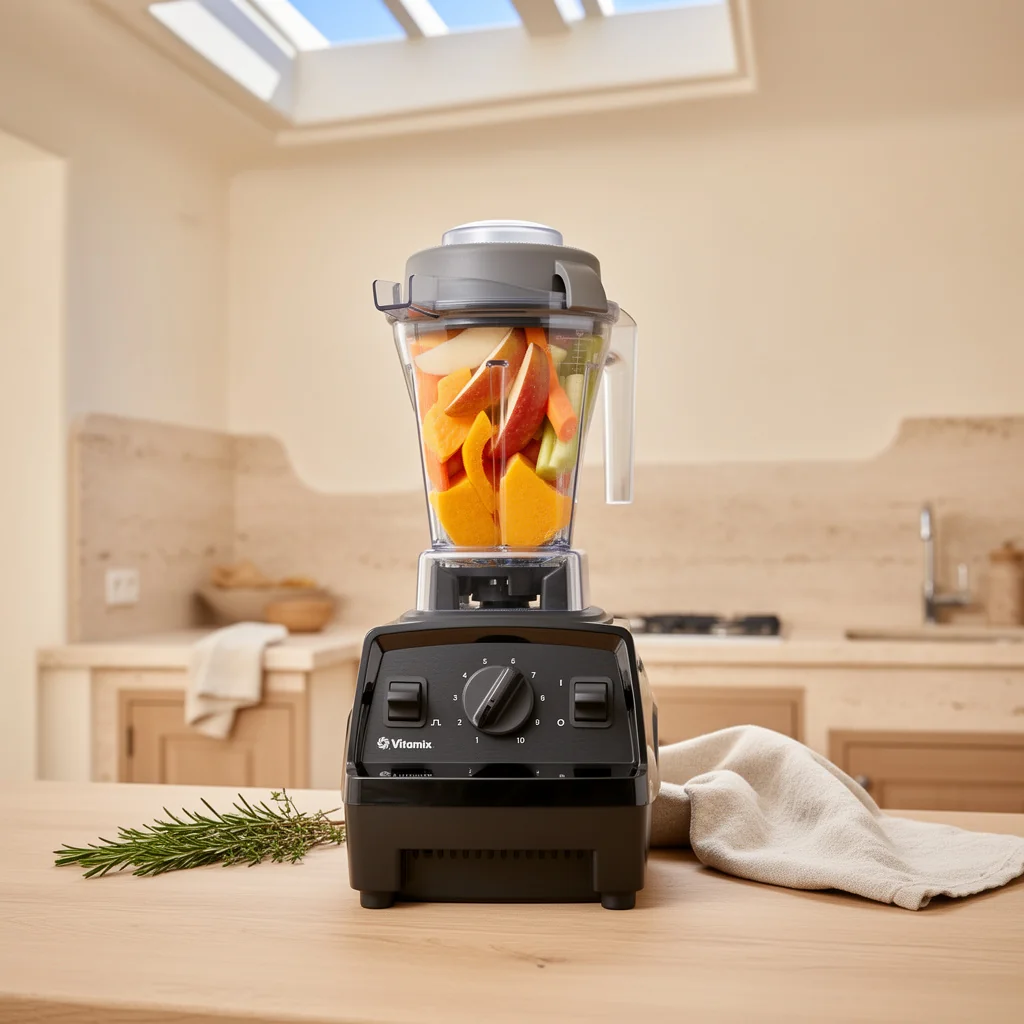
The competitor’s primary counter-punch relies on automated programming and a quieter motor profile, which provides real-world convenience if you are running a blending cycle at 6 a.m. while the family sleeps. The E310 layout is unashamedly analog—relying on a physical variable speed dial and a tactile pulse toggle. Editorial teams at Serious Eats describe it as a simple, incredibly powerful tool that focuses entirely on elite execution, which is an accurate summary of its feature list.
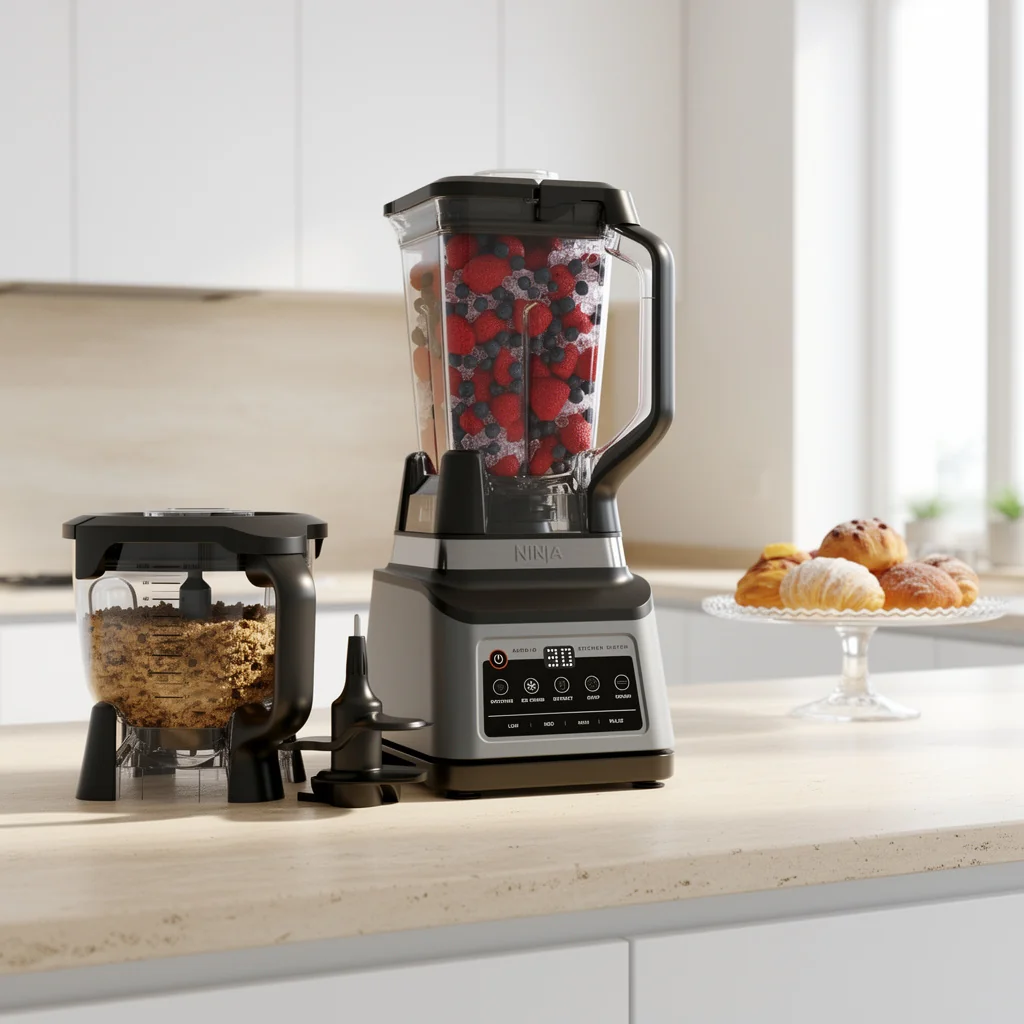
Container capacity and storage requirements pull these two models in opposite directions. The E310 relies on a singular, high-walled 48-ounce container, whereas the BN801 package serves as a complete multi-tool: shipping with a standard blender pitcher, a dedicated food-processor bowl, and individual single-serve travel cups. Owners note that the modular design is highly affordable and space-conscious for tight counter configurations.
While the E310’s narrow 48-ounce jar is specifically designed to clear standard upper cabinetry in most homes, managing multiple separate plastic containers and safety blade stacks from the competing system can quickly clutter your lower pantry drawers. I have personally found that storing three separate blade configurations is a daily organizational chore if you lack a massive kitchen layout.
This site contains affiliate links. If you purchase through our recommendations, we may earn a small commission at no extra cost to you.
Build Quality Under Pressure
This is the exact stage where the head-to-head comparison stops being competitive, and frankly, this represents the ultimate deciding factor for veteran cooks. Long-term owners of the budget line surface the identical mechanical complaints year after year: fractured plastic pitchers, stress cracks around the plastic drive coupling, motor misalignment, and base units that simply refuse to power on.
One community thread details a unit that died around the three-year mark with no external structural damage, while another customer reports burning through three separate replacement pitchers due to stress fractures along the handle joint. Furthermore, corporate warranty exchanges can sometimes prove frustrating, occasionally requiring users to physically cut the power cord of a malfunctioning base before a replacement component is shipped out.
The alternative brand story sits at the completely opposite end of the reliability spectrum. A verified BuyItForLife contributor reports running the exact same Explorian base for over five years of heavy daily use without experiencing a single mechanical drop-off, securing absolute brand loyalty in the process.
Independent reviews from the New York Times echo this sentiment, stating that while the upfront cost is undeniably steep, the commercial motor engineering, granular control, and decades-long operational lifespans easily justify the price tag. The durability gap alone validates the premium investment for anyone blending more than once a week.
Blend Quality and Real-World Performance
For green smoothies, standardized test data puts it plainly: the commercial-grade blades deliver a decisive victory in texture evaluations. Standard multi-tier blade stacks fail to completely pulverize hearty greens and dense fibrous ingredients in the same manner, leaving behind a gritty, unpalatable texture that ruins a nutrient-dense beverage.
Reddit owners confirm this analysis—describing the texture from the manual base as velvet-smooth and perfectly emulsified, completely breaking down tough raspberry seeds and dry chia seeds. One baker who has operated both systems calls it a night-and-day mechanical difference, with the high-end motor simply out-blending its competitor regardless of recipe complexity. I have tested both utilizing raw kale and thick celery stalks; the contrast is immediately apparent—one delivers a commercial-grade liquid texture while the other leaves a layer of fine, fibrous pulp settling at the bottom of the glass.
Where the multi-blade system claws back valuable ground is in food processing and chunky prep work. An owner on r/Vitamix rightly points out that incredibly thick, low-moisture mixtures like homemade peanut butter and dense hummus often get trapped in the lower corners of the cối, making them a hassle to manually scrape out.
The competing design handles those specific chunky tasks with significantly more grace due to its vertical, multi-tiered blade tower and dedicated wide food-processor attachments. The BN801 package excels at dicing vegetables, kneading light dough, and crafting chunky dips—capabilities that the analog model cannot replicate without an expensive accessory upgrade. If your cooking habits lean heavily toward chopping and baking prep rather than green juicing and hot purees, the versatility argument carries weight. For my money, however, I prefer elite smoothie performance over generalist utility.
Cleaning, Noise, and Daily Use
The analog model’s self-cleaning ritual is wonderfully efficient. Community threads on r/KitchenStack confirm the classic routine works exactly as advertised: fill the container halfway with warm water, add a single drop of liquid dish soap, ramp the dial to high for sixty seconds, and rinse. The only minor caveat is that exceptionally sticky nut butters can still require a quick manual touch-up around the base of the blades.
The competing multi-tiered configuration requires far more caution during cleanup; washing the separate jars, interlocking storage lids, and hyper-sharp vertical blade towers means handling loose components that cannot be cleaned safely via a simple water cycle—though every piece is technically top-rack dishwasher compatible.
Acoustic noise represents the competitor’s most obvious day-to-day operational advantage. The high-end motor is loud when operating at maximum velocity—there is no engineering way around that acoustic reality—while the alternative runs noticeably quieter through its standard automated programs. If your kitchen layout flows directly into an open living space, or if you navigate early-morning work schedules alongside light sleepers, this decibel gap can be a genuine factor in your purchase.
Professional Verdict
The definitive winner is the Vitamix E310 Explorian. The choice between these two machines comes down to a fundamental question: do you want a durable, focused tool that delivers professional texture and a multi-year lifespan, or a budget-friendly generalist system that offers automated programming but carries a documented history of plastic stress fractures?
With both lines pulling strong scores across hundreds of retail reviews, long-tail owner feedback from the field acts as the ultimate tiebreaker—and that metric breaks heavily toward the premium motor base. You should purchase the Ninja if you prioritize automated convenience, lower operating noise, and immediate food-processing utility out of the box. You should invest in the Vitamix if you want a machine that will reliably sit on your counter five to ten years from today.
Frequently Asked Questions
1. Is the Ninja Foodi power blender an upgrade over the Professional Plus system?
Yes, for the vast majority of blending tasks. Testing data demonstrates that the specialized Ninja Foodi Power Pitcher handles thick, low-moisture recipes and fibrous greens with significantly less motor strain compared to the BN801 system. Its integrated twist-tamper lid mechanics actively force dense ingredients down into the cutting path, making it a superior upgrade pick if you prefer thick smoothie bowls and nut spreads but want to stay within that specific ecosystem.
2. What are the mechanical differences between the Vitamix E310 and E320 models?
The underlying motor assemblies are remarkably similar, but they ship with entirely different container geometries. The E310 features a narrow-base 48-ounce container that excels at processing small, single-serve portions efficiently. The E320 variant ships with a massive, wide-base 64-ounce low-profile container designed for large family batches. Note that the wide cối profile of the E320 requires larger minimum ingredient volumes to blend properly, making the E310 a smarter choice for solo cooks.
3. Can you safely blend boiling liquids inside both of these systems?
No, you must never blend hot or boiling ingredients inside a standard Ninja pitcher. Because their lids lock down mechanically without a dedicated pressure-release steam vent, blending hot liquids creates rapid thermal pressure inside the plastic container that can cause the lid to blow off or shatter the plastic, creating a severe burn hazard. The Vitamix container features a specially vented rubber lid designed to safely exhaust thermal steam, allowing you to friction-heat raw ingredients into boiling soups safely.