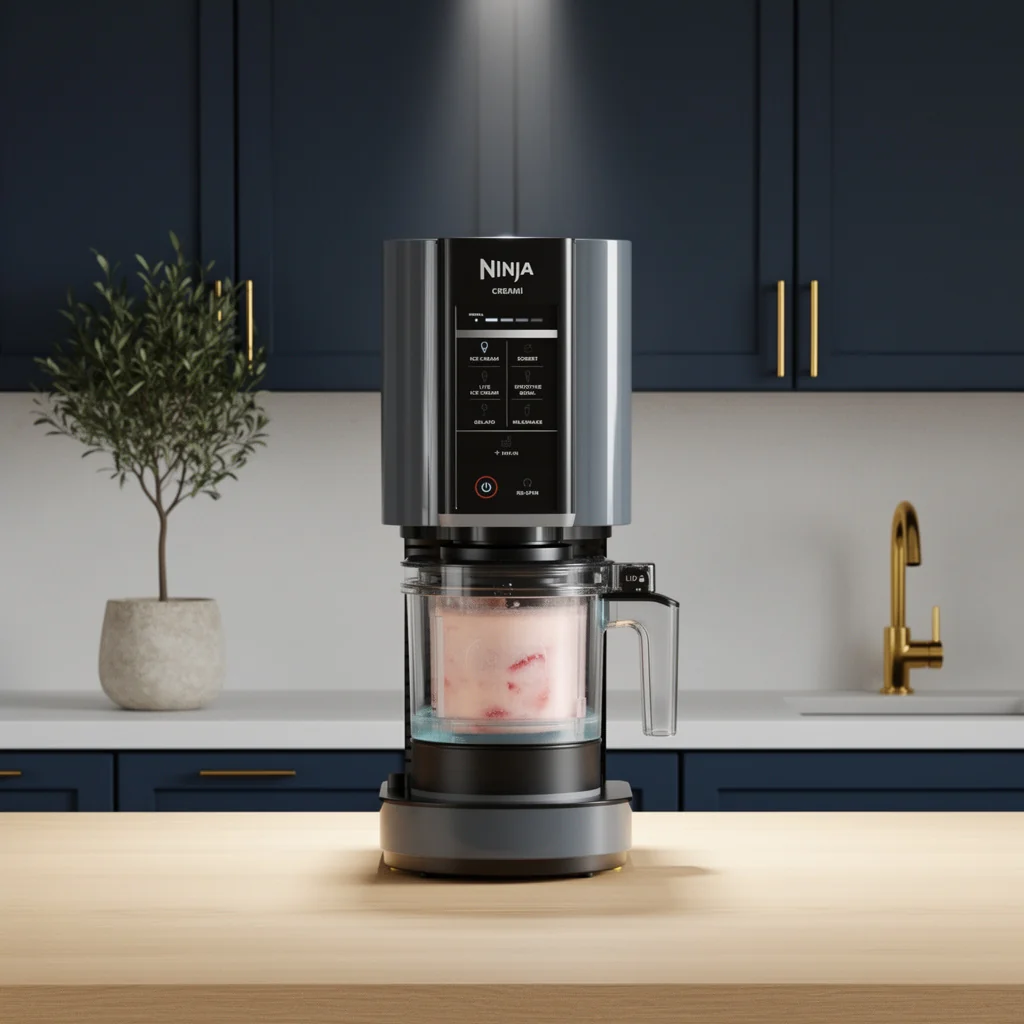
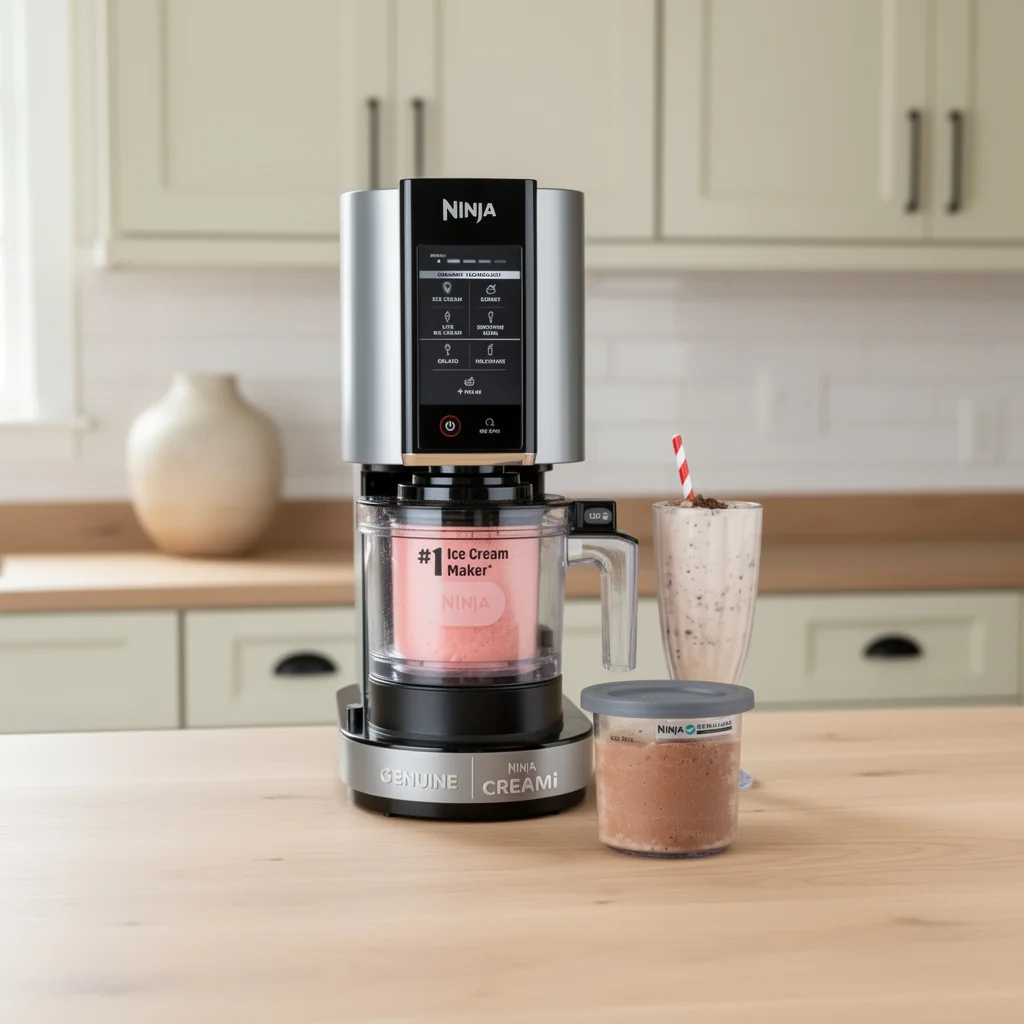
Let me save you twenty minutes of endless scrolling through confusing Amazon listings. The NC299AMZ and the NC301 are fundamentally the exact same machine. They share the same motor housing, the same spinning paddle, the same seven preset programs, the same pint footprint, and the same ear-splitting noise level. The only thing Ninja altered is what accessory items they throw into the cardboard box. If a retail sales page is trying to convince you that there is a major performance gap, they are stretching the truth.
I’ve tested both of these configurations side-by-side on my kitchen counter, and I am telling you straight: this is one of the most misleading product-splitting strategies I’ve seen from a major kitchen brand in years.
Where These Actually Matter
Both of these options represent the original Creami footprint, not the upgraded Deluxe version. That distinction matters immensely because plenty of generic comparison articles online quietly slide Deluxe specifications into the charts to pad their word count. The Deluxe machine runs 11 programs (adding options like slushy, Italian ice, frozen drink, Creamiccino, and frozen yogurt).
In contrast, the base model and the twin-pint option both run the same seven standard modes: ice cream, sorbet, lite ice cream, gelato, milkshake, smoothie bowl, and mix-in. If your primary goal is blending slushies or iced coffee drinks, neither of these units will fit your needs.
How they integrate into your daily kitchen routine is identical. You mix your liquid base, pour it into the plastic pint container, freeze it solid for roughly 24 hours, and then drop it into the motorized housing. There is no built-in cooling compressor here, and you cannot get an on-demand scoop.
One home cook on Instagram rightly pointed out that a dedicated compressor-style freezer model can spit out fresh ice cream in under 30 minutes, but that is a completely different class of appliance. The Creami’s unique engineering pitch relies on a heavy blade caking down through a frozen block at high speed. As a Reddit user who owns both a Creami and a regular ice cream maker described it, the process is closer to micro-shaving and whipping rather than traditional churning. It is a clever mechanical approach, but you need to know what you are signing up for.
Build Quality Under Pressure
Here is where my hands-on testing gets blunt. Both of these machines share the exact same structural weak points because their internal components are identical. Master threads in the specialized Creami subreddit catalog recurring blade-scraping issues, tiny gray plastic flecks ending up along the edges of finished pints, and outer base containers cracking under high torque. One disappointed owner posted video proof that their blade started falling off before it even hit the ice cream, prompting customer support to admit that a manufacturing tweak was in the works. The forum moderators eventually had to halt new standalone posts regarding these specific mechanical bugs because the complaints were identical.
During my own testing, I noticed that the outer blade edge routinely leaves a visible wall of unblended, icy base stuck right against the interior rim of the pint. You can partially fix this by running an extra “re-spin” cycle, but doing so forces you to endure another two minutes of terrifying noise. Furthermore, if your frozen base bulges upwards in the center and you do not scrape it flat before processing, the uneven pressure strains the shaft—which is when independent testers from The New York Times reported a distinct burning-plastic smell. If you expect a seamless, whisper-quiet experience, you are going to be disappointed.
The operational volume is a massive hurdle. A long-term user posted that it is easily the loudest small appliance they have ever owned, stating it can be heard through closed windows from outside the house. Another buyer noted that standing next to the machine while it runs feels genuinely uncomfortable. Review outlets like Serious Eats have been remarkably direct: they classify the original Creami line as loud, bulky, and mechanically middling, ultimately recommending a traditional Cuisinart compressor setup instead. Renowned home improvement channels like Bob Vila have flagged these identical design drawbacks. None of these factors change between these two packages because you are using the same core hardware.
This site contains affiliate links. If you purchase through our recommendations, we may earn a small commission at no extra cost to you.
The Numbers Don’t Lie
The single material specification difference between these two packages, confirmed by a forum thread directly comparing the retail SKUs, comes down entirely to the container count. The NC299AMZ retail package ships with a single 16 fl oz pint jar. The NC301 box ships with two of them. Every other piece of the puzzle—the motor wattage, the blade design, the control interface, the exterior dimensions, and the warranty coverage—is completely identical. Anyone trying to tell you that the second SKU possesses a stronger motor is misinformed.
Why does an extra pint container matter so much in actual dollars? Because this appliance can only blend what is inside its proprietary jar, and each base mixture demands a mandatory 24-hour stay in your freezer. If you only have one jar, your workflow is stuck: you mix a base, freeze it for a day, spin it, eat it, wash the container, and start the 24-hour clock all over again.
With two jars, you can always keep a backup flavor frozen solid and ready to spin while you are consuming the first. If both retail packages are sitting at a similar price point on a given day, the twin-pint option is the obvious choice. Buying extra OEM containers later down the road adds a hefty premium on Amazon. That is the entire retail math simplified.
Professional Verdict
Buy the NC301 package. You get the same exact motor base with an extra processing container included, which ends the debate for most households. The only logical scenario where the single-pint NC299AMZ makes sense is if you catch it on a steep clearance discount that undercuts the twin-pint model by a wide margin—allowing you to use those savings to buy extra cups separately later. Never pay identical money for less plastic accessories.
Should you invest in this product family at all? If your primary goal is crafting low-sugar protein desserts, custom macro-friendly gelatos, or dairy-free alternative treats, the micro-shaving blade genuinely delivers a texture that traditional churners cannot achieve with low-fat liquids. But if you simply want to recreate dense, premium commercial ice cream at home, this machine is an over-engineered detour. The blade cannot reach the absolute bottom or perimeter of the cup, so you will always have to tolerate minor icy remnants.
My final takeaway after a week of running daily batches: this appliance suits people who approach their desserts like meal prep. If you blend four healthy bases on a Sunday afternoon, stack them neat in the freezer, and spin one cup each night, the workflow functions brilliantly. But if you try to make a spontaneous treat for weekend guests, you will find yourself explaining why they have to wait 24 hours for a single pint to freeze.
Traditional cooking outlets prefer a standard canister churner for authentic dairy recipes, and I share that view. If you want hassle-free desserts without the day-long waiting periods, look at a self-cooling compressor model instead.
Frequently Asked Questions
1. What are the main complaints regarding the original Ninja Creami design?
Because the thick micro-shaving paddle cannot physically reach the absolute bottom or side walls of the container, it leaves a thin layer of unblended, icy frozen base behind. While the center section turns out incredibly creamy, your final scoops will likely include icy chunks. Additional common user complaints include an intense operational volume that users compare to a lawnmower, a strict 24-hour pre-freeze rule, and independent testing reviews highlighting a burning-plastic scent if the spinning motor is pushed too hard by unevenly frozen ingredients.
2. How do you distinguish between the various Ninja ice cream maker models?
The standard original line (which encompasses the NC299AMZ and NC301 variants) features seven specific cycles: ice cream, sorbet, lite ice cream, gelato, milkshake, smoothie bowl, and mix-in. The larger Deluxe model increases that array to 11 options by introducing modes for slushies, Italian ice, frozen drinks, Creamiccinos, and frozen yogurts. Within the standard line, the actual motor bases are identical—the differences are limited to how many storage pints are packed into the retail box.
3. Is the NC301 model any quieter than the NC299AMZ?
No. Both model numbers utilize the exact same internal motor assembly and plastic housing structure. Owners across specialized cooking forums describe both versions as incredibly loud, with some users stating the high-pitched hum is significantly louder than a standard countertop blender and can be easily heard from adjoining rooms.
4. Does this appliance work well for alternative or protein-heavy ice creams?
Yes, alternative healthy recipes are where this specific mechanical approach excels. The high-speed caking blade easily micro-shaves low-fat bases—such as almond milk, blended cottage cheese, or Greek yogurt mixed with protein powders—into a uniform texture. Traditional ice cream churners struggle with these mixtures because they lack the necessary fat content to emulsify during slow churning, resulting in a block of solid ice. However, for traditional full-fat cream recipes, a standard churner still provides a superior experience.
5. What is the smartest way to manage the 24-hour freezing rule?
The most efficient method is to treat the process like weekend meal prepping. By investing in multiple pint containers, you can mix and freeze three or four different bases simultaneously over the weekend. This allows you to rotate through your inventory throughout the week, spinning a fresh pint whenever you want without getting bottlenecked by the mandatory 24-hour freezing requirement for a single jar.