Why I Ended Up Testing Both
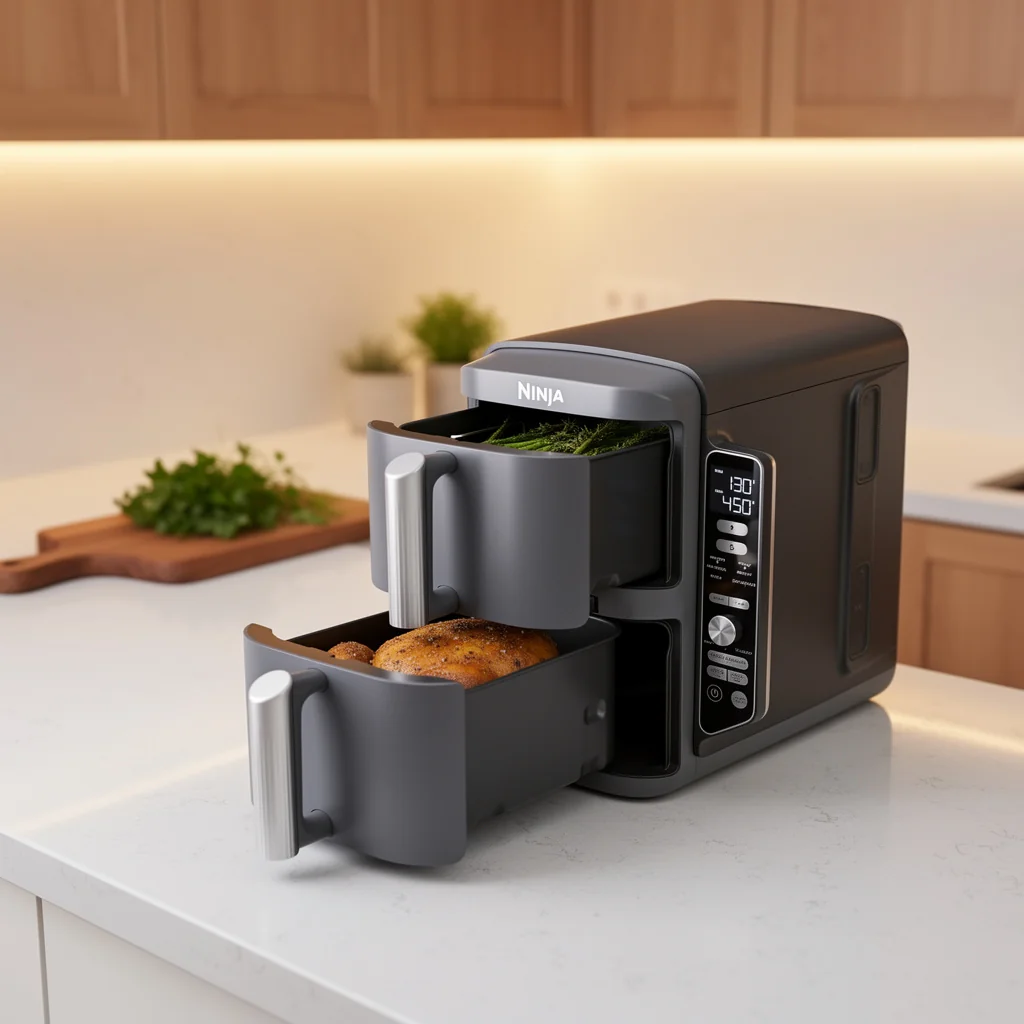
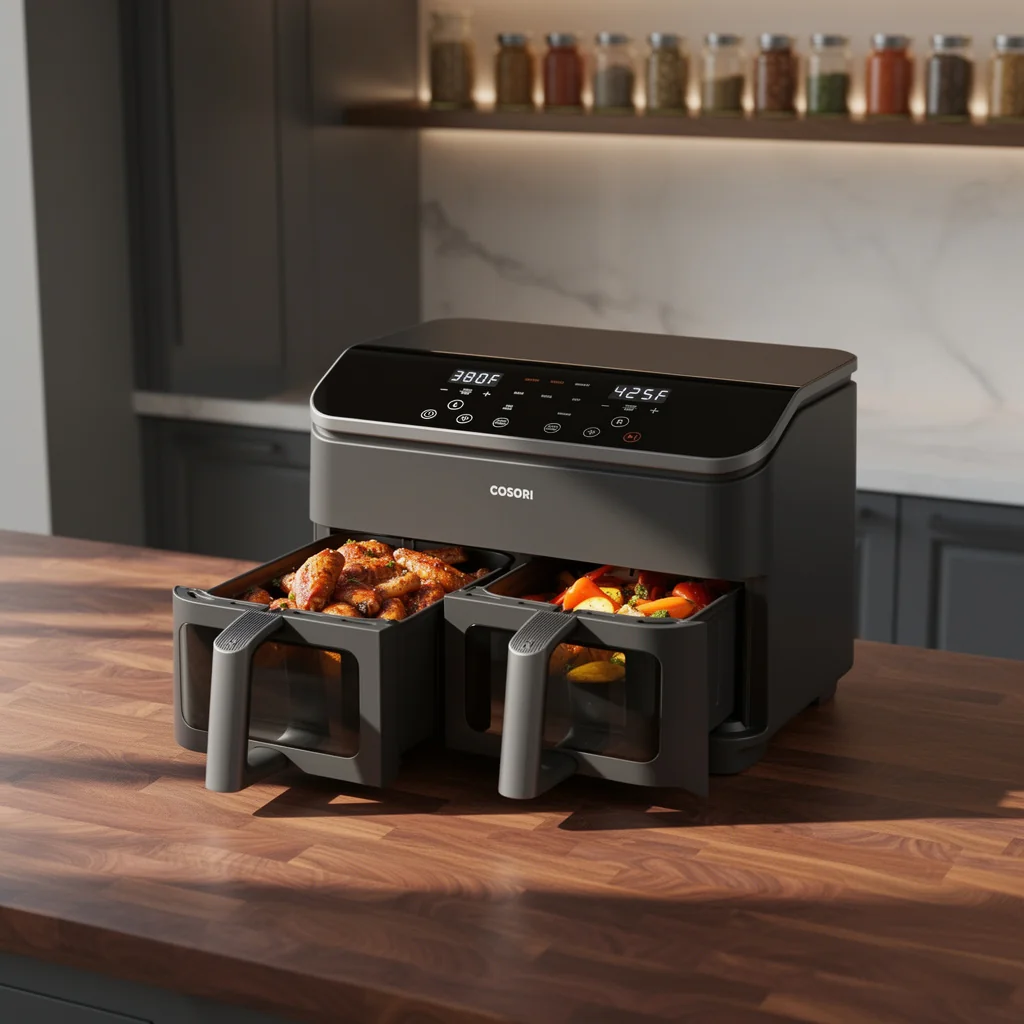
I’ve been cooking out of dual-basket air fryers for years, and these two kept showing up in every “what should I buy” thread I scrolled through. The vertical Ninja DoubleStack XL pitches itself as the ultimate space-saver, stacking its baskets vertically so it eats roughly half the counter real estate of side-by-side rivals. Cosori’s 9-quart dual contender takes the opposite route, sitting lower and wider with two clear-window baskets that let you actually watch your food crisp up.
Both promise the same kitchen dream: two separate foods, one synchronized finish time, and zero babysitting. However, the real differences between these two designs only show up after a few weeks of heavy daily cooking—which is exactly when most standard tech reviewers have already moved on. I dug deep into long-term owner threads, tracked the common failure stories, and ran both through the kind of messy weekly grind a busy family household actually puts an appliance through.
The First 30 Days: Real Impressions
Out of the box, the vertical layout of the Ninja is a genuine triumph for cramped kitchens. The SL401 stacks two baskets using what marketing calls DoubleStack Technology, and the claim of cooking four foods simultaneously using the internal racks is technically doable. Owners across forums consistently praise one massive daily benefit: it gets hot fast. One long-term user noted that the biggest benefit was simply how quickly it preheats, even when the ultimate crispness underwhelmed them.
The Cosori 9Qt feels entirely different the moment you press start. Owners repeatedly call out how quiet it runs—both the actual fan whoosh and the control panel beeps—which matters immensely in modern, open-plan living spaces. Side-by-side, Cosori’s feature set leans toward practical daily utility: generous viewing windows on both baskets, a helpful shake reminder, and a dedicated preheat setting. That preheat cuts both ways, though, as testers point out it forces a mandatory six-minute warm-up cycle before the countdown begins. Capacity-wise, Cosori’s 9-quart limit versus Ninja’s 10-quart volume is close enough that you won’t notice the difference on an average weeknight.
Performance during those initial weeks is where the design choices impact your food. The Cosori handles fundamental air frying beautifully, including what one reviewer described as the most evenly rendered bacon they had ever made. The vertical Ninja, by contrast, has a distinct mechanical quirk that takes a learning curve: its heating elements are mounted at the back of the unit rather than the top, completely changing how you have to arrange your food.
The Frustrating Bits Nobody Warns You About
Here is where the vertical Ninja layout started losing my vote. Multiple Reddit owners describe the back-mounted heating element as a major design flaw because it browns food unevenly, concentrating intense heat at the rear of the baskets. Other cooks echo this experience, noting that because of the horizontal airflow, manually rotating your food mid-cook becomes far more critical than with standard top-down air fryers. One frustrated three-week owner posted bluntly that the DoubleStack XL kind of sucks, claiming it only functions passably well when utilizing a single drawer.
The dual-basket cooking penalty is another serious drawback. Owners comparing these two setups directly have flagged that running both of the Ninja’s baskets simultaneously bogs down the heating efficiency, sometimes nearly doubling the expected cook times for denser foods. That is a brutal real-world compromise for a machine whose primary pitch is speed and dual-zone convenience.
Affiliate disclosure: We earn a small commission on qualifying purchases made through Amazon links, at no cost to you.
The Cosori dual-zone is not flawless either. One 9Qt owner reported throwing a frustrating E21 system error after just five uses, while another owner discovered a temporary workaround by ramming the basket in repeatedly until the internal micro-switch registered. That isn’t a permanent fix; it is a forced workaround for a delicate basket-detection sensor, which is a real reliability risk on newer production runs.
The saving grace here is the 2-year warranty backed by Arovast Corporation, offering real consumer recourse. Ninja owners dealing with the inherent back-heat unevenness don’t have a warranty remedy, because that uneven cooking pattern is a direct result of the machine’s core engineering.
Which One Stays in My House?
The COSORI Dual Air Fryer 9Qt is the one keeping its spot on my counter. It has its faults, but the overwhelming consensus among daily users is that when you look past the marketing gimmicks, Cosori nails the cooking fundamentals. You get quieter fan operation, clear viewing windows so you stop letting heat escape just to check on your dinner, a built-in shake alarm, even browning across both zones, and a reassuring 2-year safety net.
The vertical Ninja still has one legitimate target buyer: someone working with highly restricted, narrow counter space who desperately needs a tiny vertical footprint and doesn’t mind manually flipping and rotating food mid-cycle. If that matches your kitchen setup, the physical space advantage is tough to beat. For everyone else, the Cosori represents the smarter, more predictable long-term kitchen investment.
If you are curious about other horizontal alternatives, it is worth exploring our broader dual-zone breakdowns covering options like the Cosori Dual Blaze, which features independent top and bottom elements and pulls stellar marks for long-term reliability.
Frequently Asked Questions
1. What is the main design difference between the vertical Ninja and the Cosori 9Qt?
The Ninja stacks its dual compartments vertically with a back-mounted fan system, resulting in a narrow footprint but prone to uneven, rear-heavy browning. The Cosori utilizes a traditional side-by-side double basket arrangement featuring clear front windows, a mid-cycle shake alert, and a dedicated preheat cycle while operating with significantly less noise.
2. Which dual-basket air fryer cooks food more evenly?
The Cosori 9Qt delivers more consistent, uniform crisping because it relies on standard top-down convective airflow. The vertical Ninja’s rear heating configuration frequently draws user complaints for overcooking the back portion of the baskets while leaving the front food pale unless you actively stir the ingredients mid-way through.
3. Does running both baskets at the same time slow down cook times?
Yes, particularly on the Ninja DoubleStack. When both zones are drawing power to cook separate meals, users report a noticeable drop in heating efficiency that extends cooking times. The Cosori handles dual-zone cooking loads with more stable time management across standard items.
4. What does the Cosori E21 error code mean?
The E21 code on Cosori dual models typically indicates a basket connection or internal sensor detection fault, meaning the appliance does not recognize that the drawer is fully closed. While some owners use a firm push to reset the contact, persistent errors are covered under their 2-year manufacturer warranty.
5. Which model offers better long-term value for a busy family?
The Cosori 9Qt represents the superior overall value. It provides an extra automated cooking preset, integrated viewing windows, quieter household operation, and double the length of warranty protection compared to Ninja, without forcing you to accommodate a tricky horizontal airflow design.