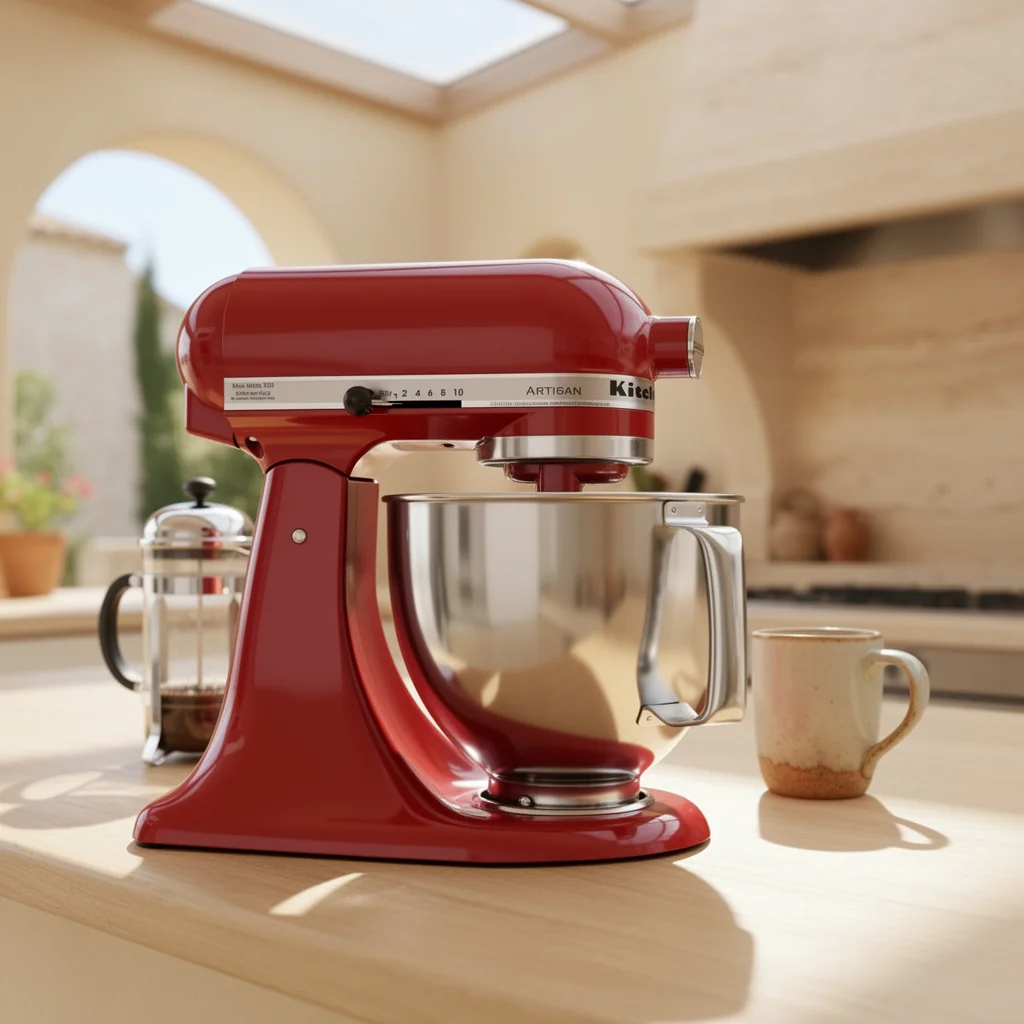
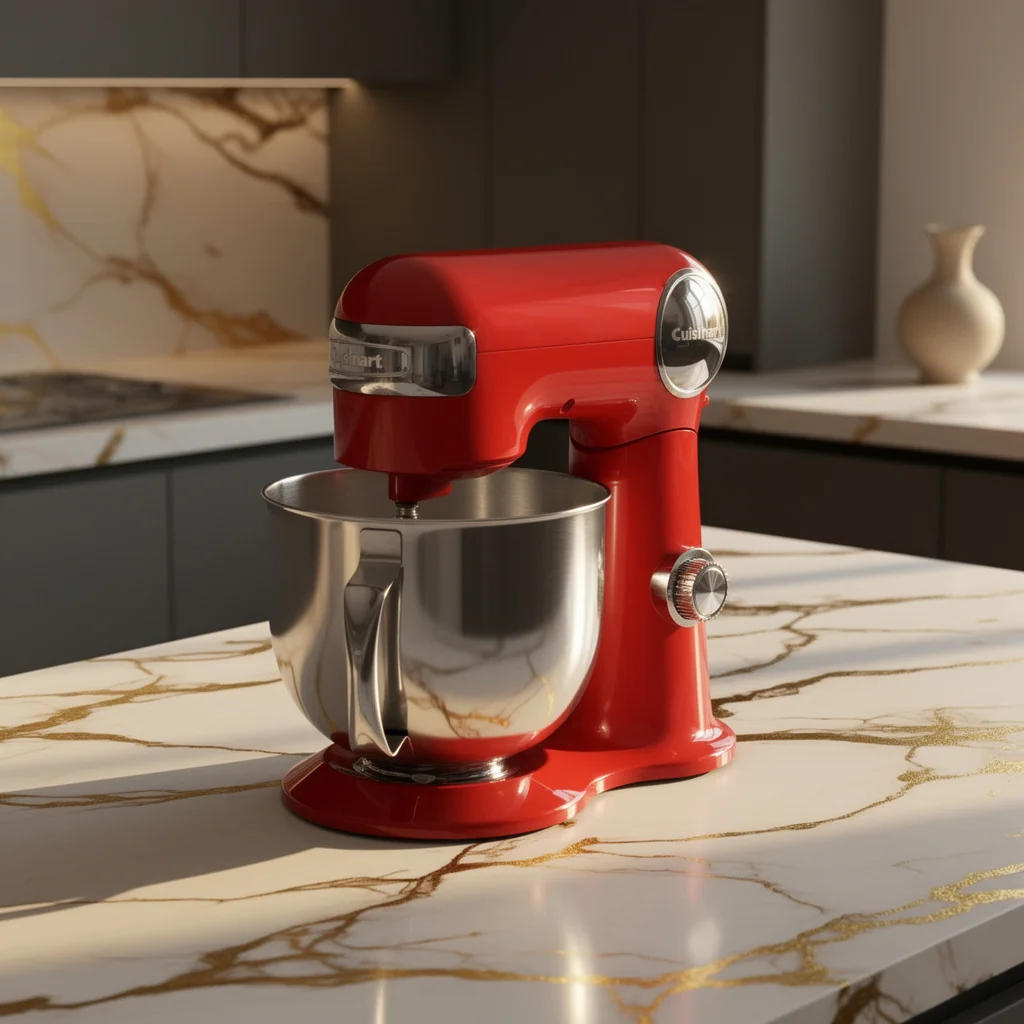
I’ve used both of these on my counter for long enough to stop caring what the boxes claim. The battle between the KitchenAid Artisan 5-Qt and the Cuisinart SM-50 Precision Master is genuinely close on paper, but it gets lopsided once you actually start baking with them. In my opinion, the spec sheet tells you almost nothing about which machine will still be sitting on your counter five years from now. Let me explain why.
What Marketing Claims vs What Owners Report
Cuisinart’s spec sheet looks like a total knockout punch. You get a 500-watt motor, a 5.5-quart bowl, 12 speeds, die-cast metal, and a splash guard. The KitchenAid Artisan answers that with a modest 325-watt motor and a 5-quart bowl. On paper, the pure numbers favor Cuisinart on every metric that matters to a home baker. Honestly, if I only looked at the specifications, I’d buy the SM-50 every single time.
Then you actually turn them on.
The Artisan is heavier—significantly so. Owners on a Reddit comparison thread flag that Cuisinart mixers run lighter than KitchenAids, and in the world of appliances, that lack of heft isn’t a benefit; it’s a durability warning sign. One Cuisinart user even ended up returning theirs because the paddle repeatedly failed to scoop ingredients off the very bottom of the bowl.
Meanwhile, a baker comparing the two pointed out a classic hands-on misunderstanding: the KitchenAid’s heavy body makes you assume it will effortlessly crush dense bread dough without breaking a sweat, but the lower wattage means the motor actually strains under the load. I’ve personally found that while the KitchenAid feels like a serious, heavy-duty piece of commercial equipment when you lift it, its internal gears face a completely different struggle than the lighter Cuisinart.
That’s the core gap. Cuisinart oversells its performance capabilities through high wattage. KitchenAid relies heavily on its historic brand reputation while under-speccing its entry-level motors. Frankly, both companies know exactly how to play the marketing game.
What Real Owners Actually Hate
The Artisan’s sterling reputation has taken some hits recently, and if you are shopping for a long-term investment, this is crucial. Compared to units built a decade ago, current batches are pulling more frequent complaints from serious home cooks.
“Quality not being as good as previous ones, struggling with bread dough.” — paraphrased from a Reddit thread on bad Artisan reviews
“Good all-around machine, and a good choice for occasional smaller batches of higher hydration bread dough. For more frequent use or larger batches, a bowl-lift model will likely be a better fit.” — paraphrased from People Also Ask answers
The translation here is simple: do not buy the 5-Qt Artisan if your main goal is weekly bread baking. The 325-watt motor handles cookie dough, cake batters, whipped cream, and mashed potatoes beautifully. However, stiff, low-hydration dough will cook the internal gears over time. According to appliance repair data, a stripped worm gear is the single most common failure point for KitchenAid tilt-heads, and it happens when you push the machine past its comfort zone. I’ve seen this play out with friends who tried using the Artisan for regular sourdough baking—the motor invariably begins making grinding noises after about 18 months of heavy use.
The Cuisinart SM-50 has its own share of design problems, and they are arguably worse for heavy baking tasks.
“Too light-weight and has too powerful of a motor causing the mixer head to shake around while trying to knead thick dough.” — paraphrased from owner reviews
This highlights the exact design contradiction nobody at Cuisinart wants to talk about. Shoving 500 watts of power into a chassis that doesn’t have the weight to anchor itself means the mixer head wobbles violently under a heavy load. You get plenty of raw turning power, but you have to spend the entire kneading cycle physically holding the machine down so it doesn’t walk off your countertop.
Now, some owners genuinely love it for bread, especially a Reddit baker who praised the larger bowl capacity for the price. But many others returned it right back into the box. I view this as a fundamental engineering flaw—physics wins every time, and raw power requires a heavy base to balance it out.
The KitchenAid’s flaw is conservative, under-powered engineering. The Cuisinart’s flaw is unbalanced engineering. You have to pick your poison.
The Counter-Intuitive Winner
The overall winner is the KitchenAid Artisan Series 5-Qt, and I’m not entirely happy about it because the Cuisinart is clearly the more attractive deal on a budget.
Here is my reasoning: long-term durability beats peak spec sheet performance for an appliance you expect to own for a decade. One Reddit user reported that their Artisan is still running perfectly after 8 years of consistent use. That is the benchmark. The Cuisinart simply doesn’t have that proven track record, and the lightweight body paired with the head-shake issue suggests it won’t survive that long under heavy use.
The Artisan remained the top pick for mass-market testing because it just keeps running, not because it has the flashiest numbers. Quite frankly, I would rather own a mixer that is slightly underpowered but lasts a decade than one that is highly powerful but strips itself out or breaks down in three years.
The upfront cost difference is the real elephant in the room. A recent Reddit thread pegged the larger 5.5-qt KitchenAid models at around $600, which leads many buyers to eye the Cuisinart SM-50 as the ultimate budget alternative. If your budget is strictly capped below the price of an Artisan, the Cuisinart isn’t a bad machine—it’s a smart budget compromise. But if you are comparing the standard 5-quart Artisan versus the SM-50 head-to-head on true long-term value, the KitchenAid wins on cost-per-year of ownership.
This site contains affiliate links. If you purchase through our recommendations, we may earn a small commission at no extra cost to you.
The only scenario where I would flip my recommendation: if you bake bread weekly, the KitchenAid’s price tag is an absolute dealbreaker, and you are comfortable potentially replacing your mixer in a few years. In that specific case, the SM-50’s raw 500-watt capacity earns its spot on your counter. Otherwise, stick with the classic.
Quick Buying Advice
- Buy the KitchenAid Artisan 5-Qt if you bake occasionally, prefer the classic tilt-head design, and want a machine that will reliably last for a decade. The capacity handles small to medium batches without breaking a sweat, and the optional attachment ecosystem is unmatched in the industry.
- Buy the Cuisinart SM-50 Precision Master 5.5-Qt if you need extra bowl capacity at a much lower upfront cost, plan to knead dough frequently, and don’t mind a lighter machine that moves around on the counter during heavy tasks.
- Skip both options if you are baking heavy artisan breads multiple times a week. Save your money and buy a proper bowl-lift model instead; even the manufacturer Q&As hint at this. We have reviewed several heavy-duty bowl-lift options across the site.
Frequently Asked Questions
1. Is the KitchenAid Artisan good for baking bread?
For occasional baking, yes. For higher-hydration bread dough in small batches, it is perfectly adequate. However, for frequent bread baking or larger, dense batches, owner reports and Q&A snippets agree that a bowl-lift model is a much better fit. The Cuisinart SM-50’s 500-watt motor offers more raw pulling power compared to the Artisan’s 325 watts, but the SM-50’s lighter chassis cancels out a lot of that mechanical advantage during tough kneading cycles.
2. What is the most common problem with the KitchenAid mixer?
The worm gear. This is the sacrificial nylon gear designed to strip out to protect the motor if the machine faces an excessive load. It wears down over time, especially if you consistently force the mixer past its structural capacity with low-hydration doughs. The Cuisinart’s most common failure pattern is different, focusing on significant head shake under load and a factory paddle height that misses ingredients at the bottom of the bowl.
3. Is a 5.5 qt stand mixer big enough?
For almost any standard home kitchen, absolutely. A 5.5-quart capacity can handle up to 11 dozen cookies, over 7 lbs of bread dough, or roughly 6 lbs of mashed potatoes in a single batch according to standard manufacturer testing. The Cuisinart SM-50 hits this 5.5-qt mark, while the standard Artisan sits just below it at 5 quarts, which is still more than ample for everyday home cooking needs.
4. Is the KitchenAid Artisan worth the high price?
For committed home bakers, yes. It remains a historic best-seller because the chassis is robust, parts are easy to source, and the overall mechanical design has held up for decades. It is a steep investment if you aren’t sure how often you’ll use it. If price is your main deciding factor and you want maximum capacity for your dollar, the Cuisinart SM-50 is the clear value alternative—just make sure you understand the trade-offs in structural weight and long-term reliability before buying.